
Modern classrooms are moving away from traditional, lecture-heavy formats. In their place, educators are designing interactive environments that focus on collaborative work, team projects, and real-time student participation. This shift ensures students develop essential soft skills like empathy, leadership, and public speaking alongside technical skills.
The Benefits of Peer-to-Peer Learning
When students work together to solve complex problems, they learn to articulate their thoughts clearly and respect diverse perspectives. Educators act as facilitators, guiding discussions rather than dictating lectures. This active learning approach increases class engagement and reinforces understanding as students teach each other.
Designing Collaborative Activities
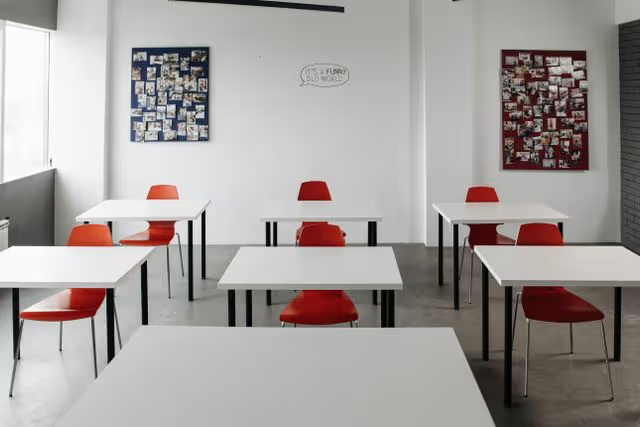
To implement successful collaboration, schools are restructuring physical environments. Flexible seating, mobile tables, and accessible digital boards enable groups to form and break apart easily. Project-based evaluations are replacing standard written exams, allowing students to build real-world solutions collectively.